
Introduction
Heavy rainfall can expose weaknesses in a residential compound, from water collecting around the house to muddy lawns, eroded soil and flooded driveways. Without proper planning, these problems can damage outdoor spaces and affect the long-term condition of a property.
Choosing the right outdoor drainage solutions in Kenya begins with understanding how water moves across the land, the type of soil present and where collected rainwater can safely flow. A suitable drainage system should protect buildings, preserve landscaping and keep outdoor areas usable throughout the rainy season.
At TM Creations & Outdoor Designs, proper ground preparation and drainage planning are important considerations when developing functional residential landscapes. Here are seven practical approaches homeowners can consider.
1. Install Surface Drainage Channels
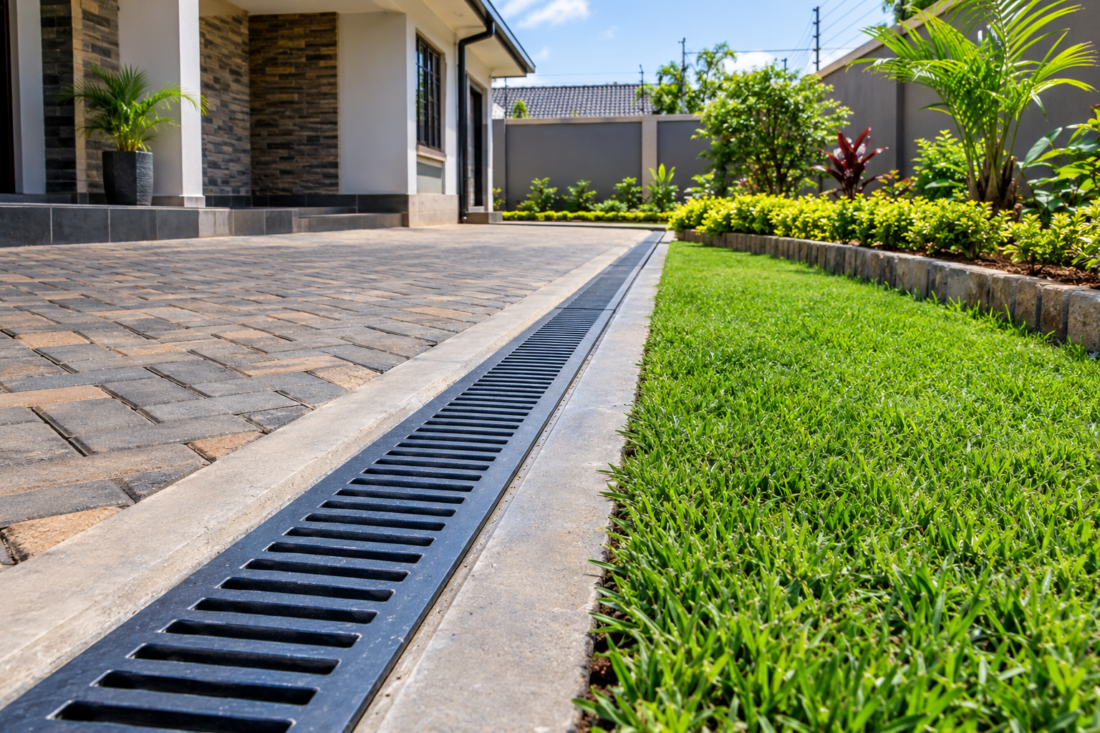
Surface drainage channels collect and direct rainwater away from areas where it would otherwise accumulate. They are particularly useful along driveways, paved walkways, parking spaces and sections of a compound that receive runoff from higher ground.
Channels may be constructed using concrete, masonry or suitable prefabricated drainage products. Their dimensions, gradients and discharge points should match the expected water flow.
For homeowners considering outdoor drainage solutions in Kenya, surface channels can be an effective option where runoff travels across hard surfaces. However, the channels must lead to a suitable discharge point rather than transferring the flooding problem elsewhere.
2. Consider French Drains for Waterlogged Areas
French drains are underground drainage systems commonly made using a gravel-filled trench and a perforated pipe. They collect excess subsurface water and direct it towards an appropriate outlet or infiltration area, depending on the design.
They can be useful in persistently soggy garden sections, along suitable slopes and in areas where water accumulates beneath the surface.
Before installation, assess the soil’s ability to absorb water, the depth of groundwater and the available discharge options. French drains are not suitable for every property, particularly where the soil drains poorly or there is nowhere safe for collected water to go.
3. Improve Ground Levels and Surface Gradients
Sometimes, the problem is not the absence of a drain but the way the compound has been levelled.
If the ground slopes towards a house, rainwater may collect against exterior walls or enter low-lying areas. Correcting the ground levels can help direct runoff away from buildings and towards designated drainage points.
This process may involve regrading selected sections, filling depressions and adjusting the transition between lawns, paved surfaces and buildings.
Ground levels should be planned carefully to avoid directing water onto neighbouring properties or undermining nearby structures. Where significant changes are required, professional assessment is advisable.
4. Install Channel Drains Along Driveways
Cabro paving and concrete driveways reduce the amount of rainwater that naturally enters the soil. Consequently, more runoff may travel across the surface during heavy rainfall.
Channel drains installed across suitable sections of a driveway can intercept this water before it reaches garages, entrances or lower sections of the compound.
The drain should be selected according to the expected loading, including vehicles that may pass over it. Grates, outlets and connections should also be suitable for the site.
When planning outdoor drainage solutions in Kenya, coordinate drainage installation with paving works. This helps avoid unnecessary excavation and ensures that the finished driveway has appropriate gradients.
For related landscaping ideas, explore our compound landscaping designs in Kenya.
5. Use Soakaways Where Ground Conditions Allow
A soakaway is designed to temporarily receive collected water and allow it to infiltrate into suitable surrounding soil.
It may be considered for certain residential stormwater applications where sufficient space is available and the soil can absorb the expected volume of water. Its suitability depends on infiltration testing, groundwater conditions, nearby structures and applicable requirements.
A soakaway that is too small or installed in unsuitable soil may fill quickly and fail during heavy rain. It should therefore be sized according to the site’s conditions rather than an arbitrary standard measurement.
A professional site assessment helps determine whether a soakaway, a connected drainage system or another solution is more appropriate.
6. Protect Sloping Compounds Against Soil Erosion
Water flowing rapidly down a sloping compound can wash away topsoil, expose plant roots and damage garden beds. Over time, erosion may also affect paths, lawns and areas around retaining structures.
Effective erosion control combines appropriate drainage with landscaping measures. Depending on the site, these may include stabilising exposed soil, planting suitable ground cover, constructing controlled drainage routes and installing retaining structures where professionally justified.
Drainage must be planned alongside any retaining wall or major earthworks. Simply redirecting water towards the base of a wall without considering its drainage requirements can create additional problems.
For properties with steep slopes or signs of ground movement, seek an appropriately qualified professional to assess the site before construction begins.
7. Maintain Existing Drains Before and During Rainy Periods
Even a well-installed drainage system can perform poorly when blocked by leaves, silt, plastic waste or construction debris.
Routine maintenance should include clearing visible obstructions, checking accessible grates and inspecting drainage channels after heavy rainfall. Homeowners should also look for cracked channels, damaged covers and places where water repeatedly overflows.
Where flooding continues despite clear drains, the underlying issue may be inadequate capacity, poor ground gradients or a blocked downstream connection. Simply cleaning the system will not correct every structural problem.
Regular inspection is a practical part of maintaining outdoor drainage solutions in Kenya and can help identify defects before they cause more extensive damage.
How to Choose the Right Drainage System for Your Compound
No single drainage method works for every property. The best approach depends on the cause of the water problem and the characteristics of the site.
Before choosing a solution, consider:
- Soil conditions: Clay-rich soil may absorb water more slowly than well-draining soil.
- Ground levels: Slopes determine how runoff travels across the property.
- Surface materials: Paving, concrete and roofs can increase the amount of runoff requiring management.
- Available outlets: Collected water needs a safe, appropriate destination.
- Existing structures: Drainage work must not compromise foundations, retaining walls or neighbouring properties.
- Maintenance requirements: The system should remain accessible for inspection and cleaning.
For larger projects, drainage planning should be coordinated with the relevant building requirements and qualified technical professionals.
Why Professional Drainage Planning Matters
Installing drains without identifying the source of a problem can result in unnecessary costs and recurring flooding. A proper assessment helps establish whether the property needs surface channels, subsurface drainage, regrading, a soakaway or a combination of methods.
At TM Creations & Outdoor Designs, we approach residential landscaping with attention to ground preparation, functionality and the relationship between drainage, paving and garden areas.
Our landscaping work can be planned alongside related improvements to help create a compound that is practical, well-organised and visually appealing.
Learn more about our landscaping services.
Frequently Asked Questions
What causes water to collect in a residential compound?
Common causes include poor ground gradients, compacted or slow-draining soil, blocked channels, inadequate drainage capacity and runoff from roofs or paved surfaces.
Are French drains suitable for every home?
No. Their suitability depends on soil permeability, groundwater conditions, site levels and the availability of a safe outlet or infiltration area.
Can drainage be installed alongside cabro paving?
Yes. Drainage and paving can be planned together so that the finished surface directs runoff towards suitable collection points.
When should I seek professional drainage assistance?
Consider a site assessment if water repeatedly collects after rainfall, flows towards the building, erodes the soil or continues to overflow despite routine drain cleaning.
Conclusion
A well-planned drainage system helps manage rainwater, protect landscaping and preserve the usability of a residential compound. The right solution depends on the property’s soil, ground levels, existing surfaces and available discharge options.
Investing in suitable outdoor drainage solutions in Kenya can help homeowners address recurring water problems before they lead to more extensive repairs.
TM Creations & Outdoor Designs can help you plan landscaping improvements with drainage and ground preparation in mind. Contact our team to discuss your compound and determine the appropriate next steps.