Choosing a surface for a driveway, parking area or walkway involves more than comparing prices. Cabro and concrete can both provide durable surfaces, but they differ in appearance, maintenance and flexibility. When considering cabro vs concrete paving, think about how the space will be used, the ground conditions and how the finished area will fit into the compound. The right choice is not necessarily the one with the lowest quotation; it is the one that performs well for the property’s needs.
Understanding cabro and concrete paving
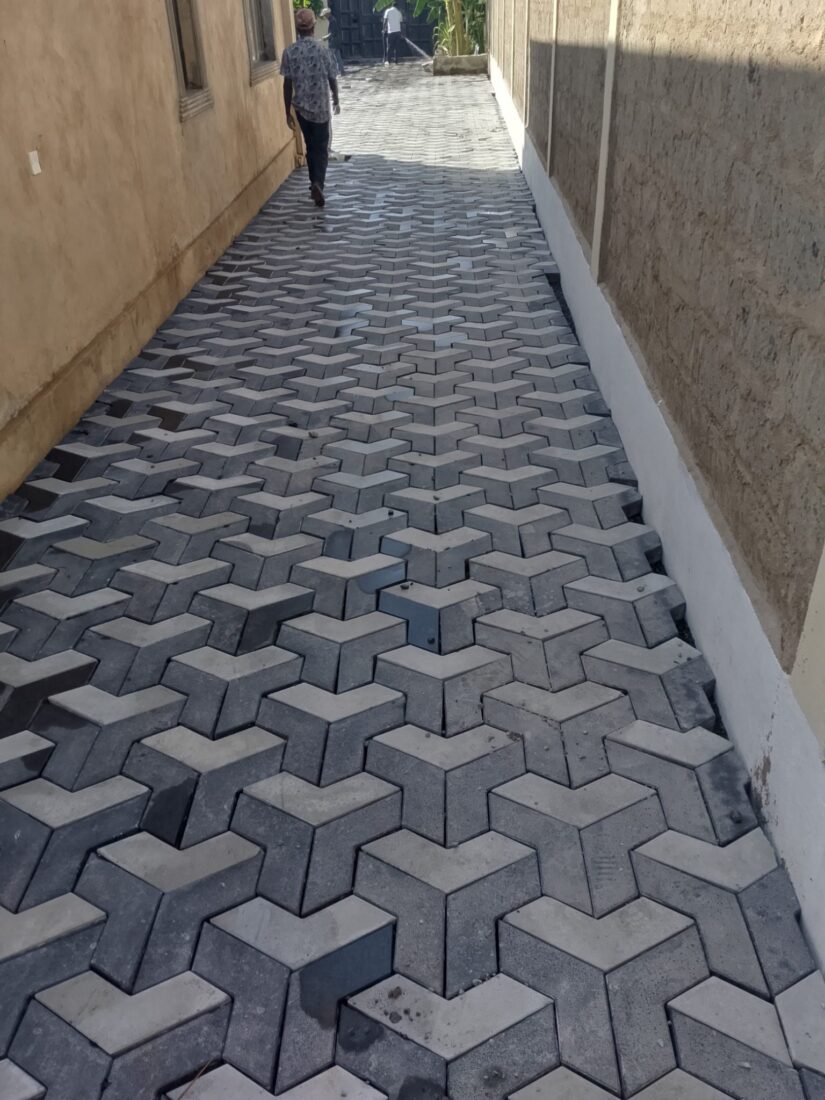
Cabro paving uses individual concrete blocks laid in a pattern over a prepared base and bedding layer. The blocks are aligned, compacted and jointed with sand. Individual sections can later be lifted for repairs or access to underground services.
Concrete paving is installed as a continuous slab. Concrete is placed over a prepared base, levelled and finished to the required thickness. The result is a firm, largely seamless surface.
1. Durability and everyday use
For a busy family driveway or shared parking area, the surface must cope with repeated vehicle movement, turning and occasional heavy loads. Walkways may have different requirements. Matching the construction method to the intended use is an important part of comparing cabro vs concrete paving.
Both surfaces can handle regular use when the base is properly prepared. Cabro suits driveways and parking bays because individual blocks can accommodate minor movement and damaged sections can be replaced separately. Poor compaction or weak edge restraints, however, can cause sinking and uneven blocks.
Concrete provides a solid surface for vehicle and foot traffic. Its performance depends on suitable thickness, joints, curing and ground preparation. If these details are overlooked, or the ground moves, cracks may develop.
2. Appearance and design flexibility
Cabro blocks are available in different shapes, colours and patterns. They can create borders, pathways and defined parking areas. Concrete usually gives a more uniform finish and can be brushed, smoothed or treated decoratively, but changing its layout later is less straightforward.
Whichever you choose, consider the building’s exterior, boundary walls and garden layout so the surface complements the property.
3. Maintenance and repairs
Maintenance should also be considered over the life of the surface, not just during the first few months. Trees, vehicle oils, soil movement and water exposure can all affect outdoor paving.
Cabro may need sweeping, fresh jointing sand or occasional weed control. Blocks can be lifted to access underground services and reinstated.
Concrete has fewer joints to maintain, but still needs cleaning and timely attention to cracks or surface damage. Repairs may remain visible.
Regular inspection helps identify loose blocks, blocked channels or small cracks before they become larger problems.
4. Drainage and ground preparation
Neither material automatically solves drainage problems. Proper installation also matters. The Interlocking Concrete Pavement Institute provides technical guidance on interlocking concrete pavement design and installation. Both need correct levels and a planned route for water to flow away from buildings and entrances.
Cabro requires attention to the base, edge restraints and laying levels; concrete needs suitable falls and, where necessary, channels or collection points. Poor preparation can cause settlement and standing water.
Assess the slope, soil and runoff before installation. These details should be addressed before paving begins.
5. How paving fits into compound landscaping
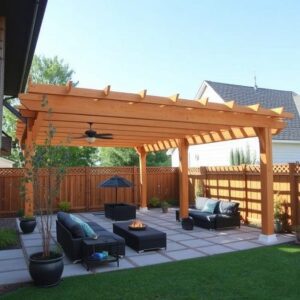
Paving should be planned as part of the outdoor environment. A driveway may connect with a lawn, planting beds, a footpath, seating area or pergola.
This is where compound landscaping matters. Paving affects movement, the space left for greenery and the overall appearance. Good planning also directs runoff away from planted areas.
A well-designed compound should balance paved surfaces with functional outdoor spaces and greenery. For more ideas on coordinating these elements, explore our compound landscaping services.
6. Cost and project planning
The final cost of either option depends on the area, site access, excavation, base materials, thickness, drainage requirements, block or concrete specification and labour.
A simple comparison of the price per square metre may leave out important preparation work. Ask what is included in the quotation, how levels will be set and how water will be managed. This makes it easier to compare proposals fairly and avoid unexpected additions during construction.
So, which option should you choose?
There is no universal winner in cabro vs concrete paving. Cabro may suit properties where patterns, flexibility and future access matter. Concrete may be preferable where a continuous, simple finish is required.
The best choice balances function, appearance and the site’s practical conditions. Consider traffic, ground conditions, drainage, maintenance and the wider design. A site assessment helps determine the right preparation and finish.
Good paving begins with a sound base and a plan for the whole compound.