
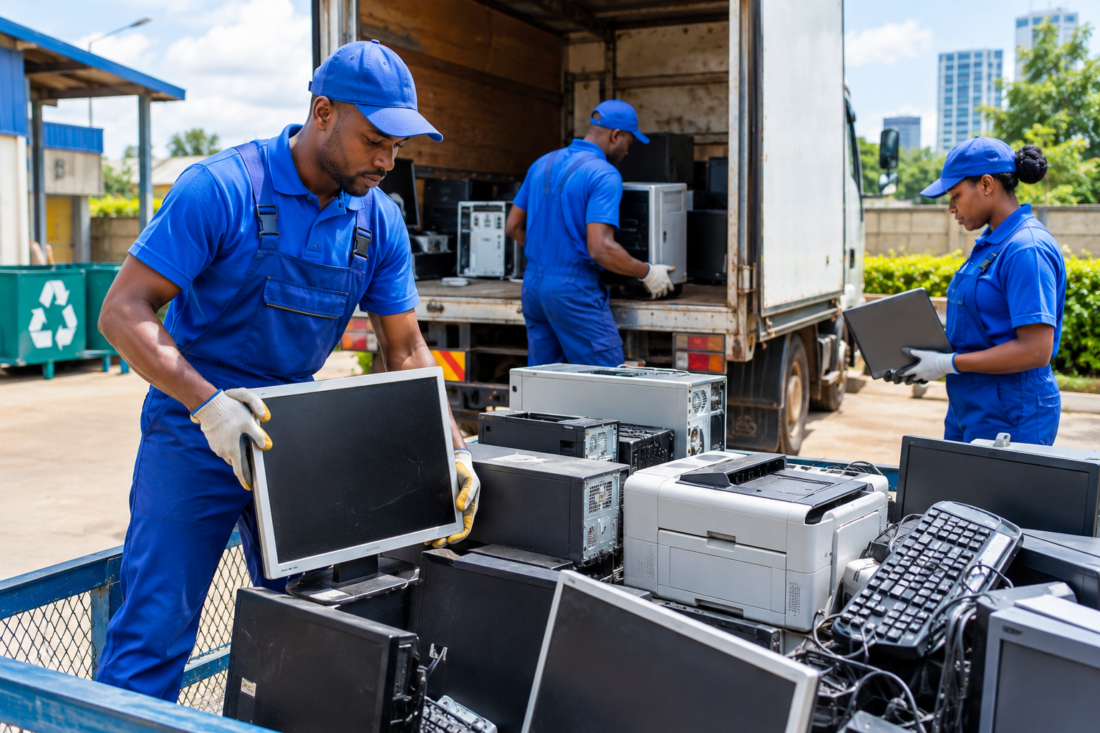
Electronic devices make work, learning and daily life easier, but they do not last forever. Computers become outdated, printers stop working, phones are replaced and cables accumulate in cupboards or storerooms. When these items are no longer useful, e-waste collection in Nairobi helps households, offices and institutions move unwanted electronics into a more organised disposal process instead of leaving them unused or mixing them with ordinary rubbish.
Electronic waste, commonly called e-waste, includes discarded electrical and electronic equipment and its components. Some items can be repaired, reused or refurbished, while others need specialist treatment to recover materials or manage hazardous components safely. Planning ahead makes collection more efficient and reduces avoidable risks.
What Counts as Electronic Waste?
Common examples include desktop computers, laptops, monitors, printers, keyboards, routers, mobile phones, chargers, cables, televisions and selected household electrical appliances. Businesses may also have servers, networking equipment and uninterruptible power supply units to clear.
Not every item should be handled in the same way. Batteries, damaged screens and equipment containing sensitive data may need special attention. Before arranging e-waste collection in Nairobi, prepare a list of the items you want removed and confirm which ones the collection provider accepts.
Why Responsible E-Waste Handling Matters
Electronic equipment contains recoverable materials, but some components may also contain substances that can harm people or the environment when broken, burned or handled carelessly. Dumping electronics in open spaces or burning cables to recover metal can expose people to harmful fumes and contaminate surrounding areas.
Responsible collection gives discarded equipment a planned route. Depending on its condition, an item may be assessed for reuse, repair, refurbishment, parts recovery or recycling. Equipment that cannot be recovered should be directed to an appropriate treatment or disposal route by authorized handlers.
Proper e-waste collection in Nairobi can also help organisations clear storage areas, reduce clutter and manage obsolete equipment more systematically. The goal is not simply to remove unwanted devices, but to ensure they are handled appropriately after leaving the premises.
How Households Can Prepare for Collection
Start by gathering unwanted electronics in one dry, secure location. Keep devices away from rain, heat and areas where children can reach them. Avoid dismantling equipment or breaking screens to reduce their size.
Separate items into broad groups, such as computers and accessories, printers, televisions, cables and batteries. Take clear photographs and estimate the quantity. This helps the provider assess the load and arrange suitable transport.
Before handing over phones, computers or storage drives, back up information you need and remove personal accounts where possible. Deleting files alone may not securely erase information from every device. Sensitive drives may require a documented data-wiping or destruction process.
What Offices and Institutions Should Do
Offices, schools and other institutions often accumulate electronics during upgrades, relocations or routine maintenance. Instead of waiting until a storeroom is full, assign someone to maintain an inventory of obsolete equipment and review it periodically.
Record equipment types, quantities, condition and asset numbers where appropriate. Ensure data-bearing devices are cleared according to the organisation’s security procedures before release.
When arranging e-waste collection in Nairobi, ask about accepted items, transport arrangements, charges and the destination of collected material. For larger loads, agree on the collection date, access requirements and who will verify the inventory. Keep handover records or receipts for future reference.
How to Choose a Collection Provider
Do not choose a provider on price alone. Ask where the electronics will be taken and whether the downstream recycler or treatment facility is appropriately authorised for its activities. Clarify how batteries and damaged equipment are handled and whether documentation is available after collection.
A responsible provider should explain the process clearly. Avoid assuming that every item will be recycled; some materials may require different treatment or disposal routes. If a provider cannot explain where the waste goes, seek clarification before handing it over.
Kenya’s National Environment Management Authority (NEMA) publishes guidance covering e-waste identification, collection, sorting, recycling and disposal. Its e-waste management guidelines are a useful starting point. Requirements depend on the activities involved, so collectors, transporters and facilities should confirm which approvals and licences apply to their specific roles.
What Affects Collection Costs?
The cost of e-waste collection in Nairobi can depend on the quantity and type of equipment, pickup location, site access, loading requirements and specialist handling needs. A few small devices may be straightforward to collect, while an office clearance involving heavy printers, servers or several floors may require additional labour and transport.
For a useful estimate, provide photographs, a rough inventory, the pickup area and any access restrictions. Ask whether the quote includes loading, transport and applicable handling charges. Confirm the final arrangement before collection day.
Make Electronic Waste Management Part of Routine Planning
The most effective approach is to treat old electronics as a waste stream that needs planning, rather than clutter to deal with at the last minute. Keep collection points secure, review equipment regularly, protect personal and company data, and use providers who can explain the next stage of the process.
For businesses planning e-waste collection in Nairobi, a written procedure can make the process easier: identify the equipment, record quantities, confirm the receiving facility, schedule transport and retain handover documents. Households can follow the same principles on a smaller scale.
Responsible handling does not end when electronics leave the building. Knowing where they go—and ensuring they reach suitable handlers—helps reduce unsafe disposal and supports better resource recovery. With proper preparation, unwanted electronics can be managed more safely, transparently and efficiently.