A well-designed home compound is more than a collection of plants, paving and outdoor features. The most successful spaces are planned as complete environments where landscaping, construction, drainage, movement and outdoor living work together.
Good home compound landscaping starts with understanding how the property will be used and how different elements will interact. A beautiful lawn, for example, may not perform well if the ground has poor drainage. Likewise, attractive paving can appear disconnected when it has not been properly integrated with the surrounding landscape.
The goal is to create an outdoor environment that is attractive, practical and capable of remaining functional for years.
1. Begin With a Proper Site Assessment
Before selecting plants, paving patterns or outdoor structures, the existing site should be assessed carefully.
The natural slope, soil condition, existing vegetation, access points and drainage patterns can all influence the design. Even a relatively flat compound may have changes in level that affect how rainwater moves across the property.
Existing features such as driveways, entrances, boundary walls, utility areas and service routes should also be considered.
A proper assessment allows the design and construction process to respond to the actual conditions on the ground rather than relying entirely on assumptions.
2. Balance Hardscape and Softscape
One of the defining characteristics of good home compound landscaping is the relationship between hardscape and softscape.
Hardscape includes cabro, stone paving, retaining walls, steps, pathways, driveways, pergolas and other built features. Softscape includes lawns, trees, shrubs, flower beds and other vegetation.
These elements should complement one another.
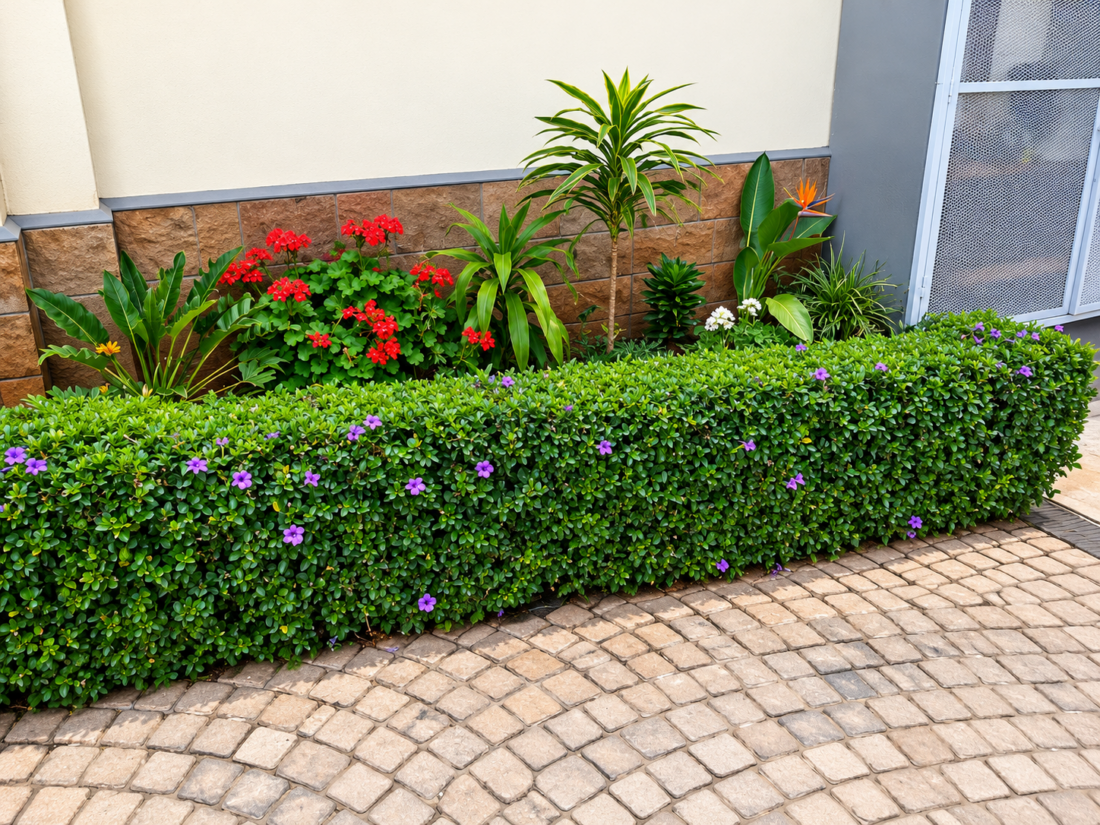
A large paved area can be softened with strategically positioned planting beds, while a broad lawn can be given structure through pathways, trees or garden borders.
The objective is not to use every available part of the compound. Leaving appropriate open areas can be just as important as adding features.
3. Make Drainage Part of the Plan
Drainage should be considered from the beginning rather than treated as a finishing detail.
During heavy rainfall, poorly managed water can cause standing water, soil erosion, damaged paving and deterioration of landscaped areas. In some situations, uncontrolled water can also create problems around buildings and other structures.
For this reason, home compound landscaping should take the natural movement of water into account before lawns and finished surfaces are installed.
Depending on the site, suitable solutions may include graded surfaces, drainage channels, French drains, soakaways and other water-management measures.
The principle is straightforward: water needs a planned route away from areas where it can cause damage.
4. Use Levels to Improve the Space
Changes in elevation can make a compound more interesting while helping to manage difficult terrain.
A sloping site can be organised into different levels using retaining walls, steps, pathways and planting areas. This can create separate zones for lawns, gardens, parking or outdoor entertainment.
However, level changes need to be constructed properly. Retaining structures require appropriate foundations and drainage, while steps should provide safe and comfortable movement.
Good home compound landscaping makes these transitions appear intentional and integrated into the overall design.
Where significant earthworks are involved, levels should be established and checked before permanent surfaces are installed.
5. Design According to How the Compound Will Be Used
A compound should be designed around real activities rather than appearance alone.
Consider how residents move through the property and what they need from the outdoor space. Some homes may require areas for outdoor dining, relaxation, children’s activities, laundry access, kitchen gardening or additional parking.
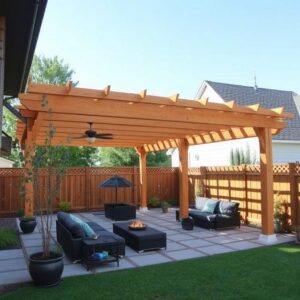
Pergolas and gazebos can provide useful outdoor living areas when positioned carefully in relation to the house, shade, views and circulation routes.
Pathways should also connect important areas efficiently. Good planning prevents unnecessary movement through lawns or planting beds and reduces conflicts between pedestrians and vehicles.
The best outdoor spaces feel easy to use because the layout has been considered before construction begins.
6. Select Materials and Plants for Long-Term Performance
Materials should be selected according to their intended use, environmental conditions and maintenance requirements.
Vehicle areas, pedestrian paths and entertainment spaces may require different paving solutions. Outdoor structures also need materials capable of handling exposure to weather.
Plant selection requires the same level of consideration.
Trees and plants should be chosen according to sunlight, soil conditions, water requirements and mature size. A plant that looks suitable when first installed can become difficult to manage if its eventual growth has not been considered.
A practical planting scheme can reduce maintenance requirements while still providing colour, shade, screening and visual interest.
This approach makes home compound landscaping easier to maintain and more sustainable over the long term.
7. Coordinate Construction Properly
Even a strong design can produce poor results when construction is not properly managed.
Work should generally follow a logical sequence. Site preparation, excavation, drainage and major structural works need to be coordinated before finished landscaping elements are installed.
For example, completing paving before drainage works are resolved can lead to unnecessary demolition and reinstatement. Similarly, installing a lawn while heavy construction traffic is still passing through the area can result in avoidable damage.
Coordination between different trades is therefore essential.
Materials should be checked before installation, measurements verified and finished levels monitored throughout the project. Where several teams are involved, responsibilities and work sequences should be clearly established.
Good project management is not simply about supervising workers. It is about ensuring that each stage is completed correctly before the next one begins.
Bringing Everything Together
What makes a home compound stand out is rarely one expensive feature. It is the relationship between many carefully considered decisions.
The driveway should connect naturally with the entrance. Paths should provide convenient movement. Lawns should suit the available space. Planting should complement the architecture, while outdoor structures should serve a practical purpose.
Drainage, levels, materials and maintenance should also be considered alongside appearance.
Ultimately, effective home compound landscaping brings construction and outdoor design together into one coordinated process. When the site is properly assessed, materials are selected carefully and construction is well managed, the result is more than an attractive compound.
It becomes a functional outdoor environment that works with the home, responds to its surroundings and remains practical long after the construction work is complete.