A beautiful garden can quickly become difficult to maintain when water collects in the compound after heavy rain. Persistent puddles, muddy lawns, dying plants and eroded soil are often signs of an underlying drainage problem. The right garden drainage solutions can help control excess water, protect your landscape and keep your outdoor space usable throughout the rainy season.
Good drainage is not simply about removing water as quickly as possible. It is about controlling where water flows, preventing damage and allowing the landscape to remain healthy. Whether you are developing a new garden or improving an existing compound, drainage should be part of the landscaping plan from the beginning.
Why Does Waterlogging Happen in Kenyan Compounds?
Waterlogging occurs when water cannot drain away from the soil efficiently. Several factors can contribute to the problem.
Heavy rainfall is one of the most obvious causes, particularly during Kenya’s rainy seasons. However, poor soil drainage, compacted ground, uneven landscaping and inadequate surface drainage can make the situation considerably worse.
Some compounds are also constructed without sufficient consideration for natural water flow. Water may run from roofs, driveways, paved areas or neighbouring properties and collect in lower sections of the garden.
Clay-heavy soils can present another challenge because they tend to retain water for longer periods. If the landscape has been poorly graded, even moderate rainfall can create persistent wet areas.
Understanding the cause is important because different garden drainage solutions in Kenya are suitable for different soil types, property layouts and water-flow patterns.
Signs Your Garden Has a Drainage Problem
Not every puddle indicates a major drainage issue. However, recurring water accumulation should not be ignored.
Common warning signs include:
- Puddles that remain long after rainfall
- Constantly muddy sections of lawn
- Grass that turns yellow or dies in particular areas
- Plants developing root problems
- Soil erosion around planted areas
- Standing water near buildings or paved surfaces
- Mosquitoes gathering around stagnant water
- Soil becoming unusually compacted or saturated
If these problems appear repeatedly, the compound may require a proper drainage assessment rather than simply replacing the affected grass or plants.
Effective Garden Drainage Solutions in Kenya
There is no single drainage system that works for every property. Professional garden design should consider the slope, soil type, existing landscaping, rainfall patterns and where excess water needs to go
1. Improve the Landscape Gradient
One of the simplest garden drainage solutions in Kenya is to correct the gradient of the landscape.
Ground should be shaped so that surface water moves away from buildings and other vulnerable areas instead of collecting in depressions.
Proper grading can be incorporated into a new landscaping project or introduced when an existing garden is being redesigned. It is particularly important around houses, paved areas and other structures where uncontrolled runoff can cause damage.
2. Install French Drains
French drains are another practical option for compounds where water repeatedly collects in particular areas.
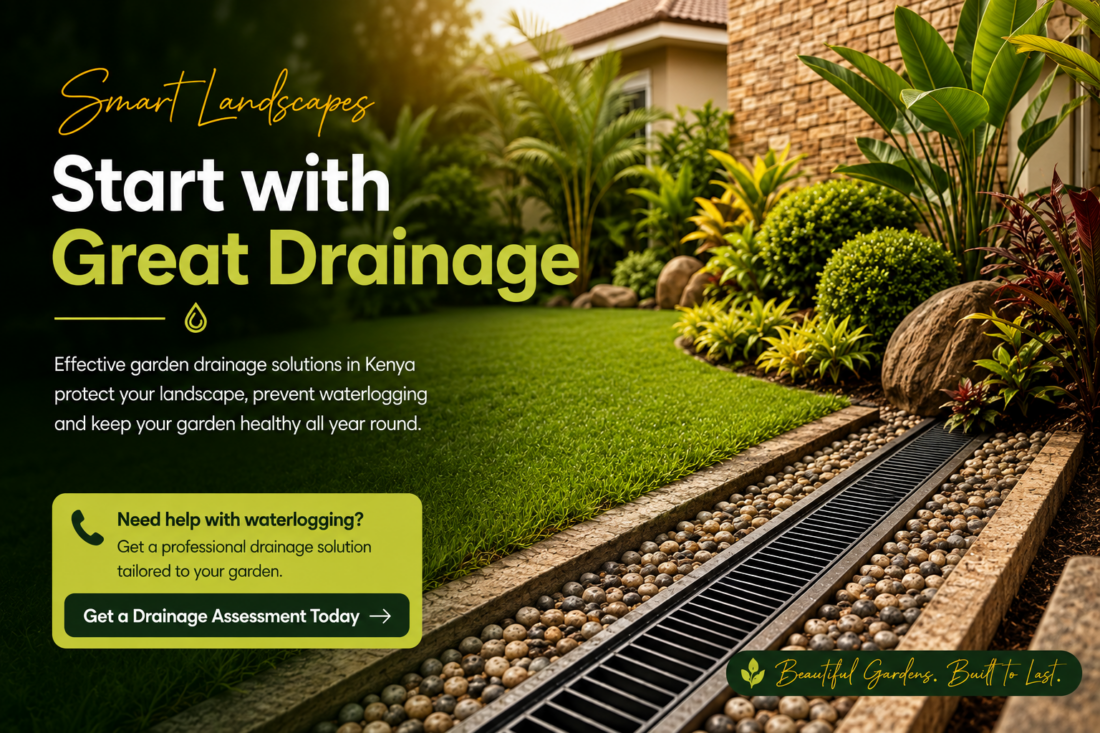
A French drain generally consists of a gravel-filled trench containing a perforated drainage pipe. The system collects excess water and redirects it towards a suitable outlet.
When correctly designed, French drains can form an effective part of a wider drainage plan without significantly affecting the appearance of the garden.
3. Use Surface Drainage Channels
Surface drainage channels can collect water from paved areas, driveways, walkways and other hard surfaces.
Instead of allowing runoff to flow directly into the garden, channels guide the water towards an appropriate drainage point.
This is particularly useful in compounds with extensive paving because hard surfaces can generate substantial runoff during heavy rainfall. Combining paving design with suitable garden drainage solutions in Kenya can help prevent water from accumulating around lawns and planting beds.
4. Improve Soil Drainage
Compacted soil can prevent water from penetrating properly. Improving soil structure through appropriate soil preparation and suitable organic matter can improve infiltration in some garden areas.
For newly landscaped compounds, soil preparation should take place before lawns and plants are installed.
However, soil improvement alone may not solve severe waterlogging. Where the ground remains saturated after rainfall, a dedicated drainage system may be required.
5. Create Suitable Planting Areas
Plants can also contribute to effective water management.
Well-designed planting beds can slow surface runoff and allow more water to infiltrate the soil. Some plant varieties are also better suited to wetter conditions than others.
However, plants should not be used as a substitute for proper drainage where there is a serious underlying problem. Landscaping should work together with drainage rather than attempting to hide the problem.
6. Manage Roof and Rainwater Runoff
Roof runoff can introduce a significant amount of water into a compound.
Gutters and downpipes should direct rainwater towards suitable drainage points rather than releasing it directly beside foundations, lawns or planted areas.
Where practical, rainwater harvesting can also help manage runoff while providing water for garden irrigation. This approach makes the landscape more efficient and reduces unnecessary water wastage.
Why Drainage Should Be Considered Before Landscaping
Installing a lawn, paving, plants or decorative features before addressing drainage problems can create unnecessary costs later.
Imagine completing an attractive garden only to discover that rainwater consistently collects beneath the lawn. Correcting the problem may then require removing sections of the landscaping before installing the necessary drainage infrastructure.
A better approach is to consider water movement during the planning stage.
Professional landscape planning should examine the existing slope, soil conditions, runoff from buildings and paved surfaces, and the intended position of lawns, planting beds and other outdoor features.
This makes garden drainage solutions in Kenya part of the overall landscape instead of an expensive correction after the garden has already been completed.
Choosing the Right Drainage Solution for Your Compound
The most appropriate drainage method depends on the property.
A small residential garden may only require improved grading and soil preparation. Another property may need French drains, surface channels or a combination of several systems.
Properties with significant changes in elevation require particularly careful planning because uncontrolled runoff can cause soil erosion and damage planted areas.
It is also important to consider where collected water will eventually go. Simply moving water from one problem area to another does not solve the drainage problem.
The objective of good drainage is to create a controlled route for excess water while protecting the garden, structures and surrounding landscape.
Maintaining Your Garden Drainage System
Even well-designed garden drainage solutions in Kenya require regular maintenance.
Leaves, soil, roots and other debris can gradually block channels and drainage points. Gutters should be cleaned regularly, while visible drainage outlets should be checked to ensure that water can flow freely.
After periods of heavy rainfall, inspect the compound for new areas of standing water, soil erosion or blocked drainage points. Changes in the landscape over time can affect how water moves through the property.
Regular maintenance can identify small problems before they become expensive landscaping repairs.
When Should You Get Professional Help?
If waterlogging continues despite basic maintenance, it is worth having the property assessed by a landscaping professional.
A proper assessment can identify where water is coming from, how it is moving through the compound and which drainage method is most appropriate.
This is particularly important where standing water occurs close to buildings, retaining walls, paved areas or established gardens. Installing a drainage system without understanding the underlying problem can result in ineffective or unnecessarily expensive work.
Final Thoughts
Good drainage is an essential part of a healthy and functional landscape. It protects lawns and plants, reduces erosion, limits standing water and helps protect buildings and paved areas from excessive runoff.
The most effective garden drainage solutions in Kenya begin with understanding how water moves through the property. From proper grading and French drains to surface channels, soil improvement and rainwater management, the right combination can make a significant difference.
If you are planning a new garden or dealing with persistent waterlogging in an existing compound, drainage should be considered before investing in further landscaping. A well-planned outdoor space should not only look attractive—it should also be designed to handle Kenya’s changing weather conditions effectively.