A beautiful garden is not created by simply adding grass, flowers and a few decorative features. Good landscaping requires planning, an understanding of the site and careful selection of materials and plants. Unfortunately, some landscaping mistakes only become obvious after money has already been spent correcting them.
For homeowners in Kenya, factors such as rainfall, soil conditions, drainage, sunlight and maintenance requirements can have a major effect on how an outdoor space performs. What looks attractive on paper may not always work well in practice.
Here are some of the most common landscaping mistakes to watch out for when planning or improving a home garden.
1. Starting Without Assessing the Site
One of the biggest landscaping mistakes is beginning the project before understanding the property.
Before choosing plants or deciding where the lawn should go, look at the existing soil, drainage, sunlight, slopes, access points and available space. A garden that receives several hours of direct sunlight requires different plant choices from one that remains shaded for most of the day.
The existing condition of the compound should guide the design rather than forcing a predetermined layout onto the property.
2. Ignoring Drainage
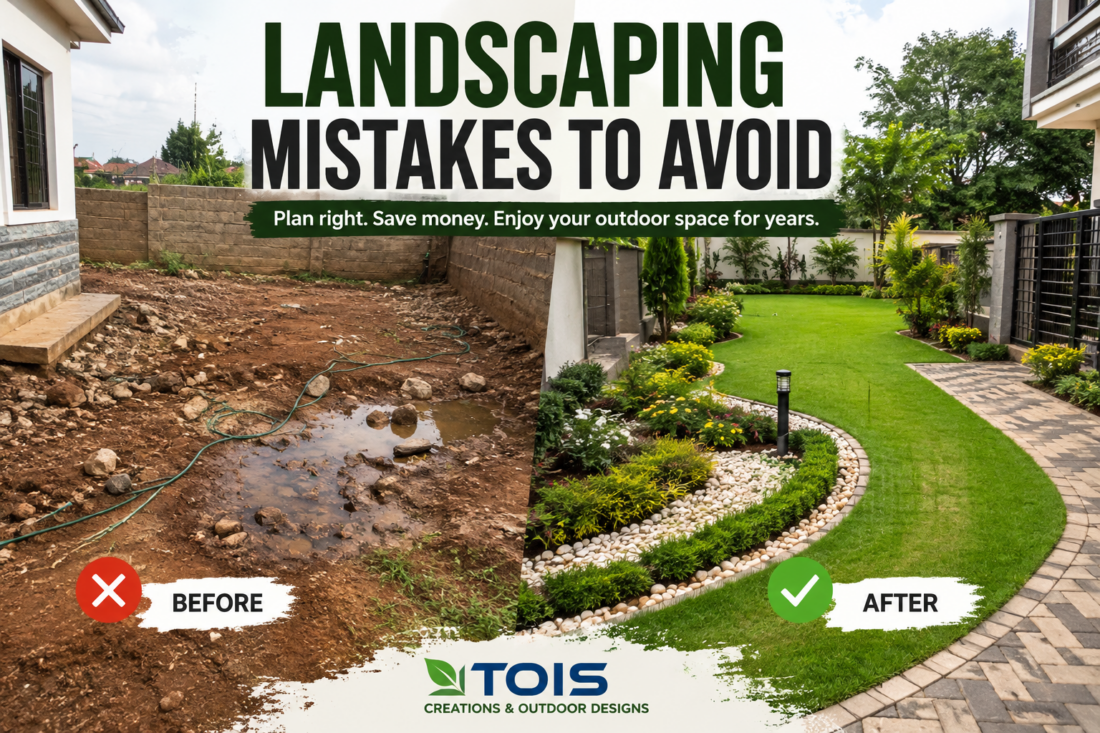
Drainage is easy to overlook because it is not usually the most visible part of a garden. However, it can determine whether a landscape remains healthy during heavy rainfall.
Poor drainage can leave sections of the compound waterlogged, damage lawns, wash away soil and affect plant health. It can also create problems around paved areas and buildings.
Ignoring drainage is therefore one of the more expensive landscaping mistakes because fixing it after the garden has been completed can mean removing work that has already been done.
A good landscape plan should consider where rainwater naturally flows and how excess water will be managed.
3. Choosing Plants Only for Their Appearance
A plant may look beautiful at a nursery but still be unsuitable for a particular garden.
Before selecting plants, consider their mature size, sunlight requirements, water needs, root behaviour and maintenance requirements. Some plants can eventually become too large for the space, while others may struggle because they receive too little sunlight.
Plant selection should therefore be based on both appearance and practicality. This is one area where avoiding landscaping mistakes can make a significant difference to long-term maintenance.
4. Planting Without Considering Mature Size
A common problem is planting everything according to how large it looks on the day it is installed.
Small trees and shrubs can eventually grow into much larger plants. If they are placed too close to walls, walkways, windows or other plants, the garden can become crowded.
Proper spacing allows plants to develop naturally while maintaining the intended appearance of the landscape. It can also reduce the need for excessive pruning later.
5. Overusing Concrete and Paving
Paving can improve access, create parking areas and provide attractive outdoor spaces. However, covering too much of a compound with hard surfaces can make the landscape feel harsh and reduce the amount of natural space.
A balanced design can combine paving with lawns, planting beds, trees and other soft landscaping features.
One of the common landscaping mistakes is treating every available section of the compound as an opportunity for paving rather than considering how different materials work together.
6. Installing a Lawn Without Preparing the Ground
A lawn is only as good as the preparation beneath it.
Simply placing turf over poorly prepared soil can result in uneven growth, poor drainage, bare patches and an unhealthy appearance. The ground may need clearing, levelling, soil improvement and proper preparation before the lawn is installed.
Homeowners sometimes focus heavily on the type of grass while overlooking the condition of the soil underneath it.
Good preparation can prevent several landscaping mistakes and reduce problems that would otherwise appear after installation.
7. Designing for Appearance but Not Maintenance
A garden should look good, but it should also be realistic to maintain.
A design containing large lawns, numerous plant varieties, hedges and elaborate features may require regular watering, pruning, mowing and cleaning.
Before approving a design, consider how much time and money will realistically be available for maintenance.
Low-maintenance does not necessarily mean boring. Thoughtful plant selection, appropriate spacing and a practical layout can create an attractive garden without making maintenance unnecessarily demanding.
8. Using Too Many Different Features
Another frequent mistake is trying to include everything in one compound.
A homeowner may want a lawn, flower beds, trees, paving, a water feature, outdoor seating, decorative stones, lighting and several different garden styles. Individually, these features can work well, but putting too many of them together can make the landscape look disorganised.
Good design usually involves deciding what the main features should be and allowing them to work together.
Avoiding unnecessary landscaping mistakes often comes down to simplicity, balance and consistency.
9. Forgetting Outdoor Lighting
Lighting is sometimes treated as an afterthought and only considered after the landscaping work has been completed.
Planning lighting during the design stage makes it easier to position lights around pathways, entrances, trees, seating areas and other important features.
Outdoor lighting can improve the appearance of a garden in the evening while also improving visibility around the compound.
The key is to integrate lighting into the overall design rather than adding fixtures randomly after everything else is finished.
10. Focusing Only on the Initial Cost
Budget is obviously important when planning a landscape, but choosing every feature based only on the lowest initial price can create problems later.
Cheap materials may require more frequent replacement, while poorly selected plants may require additional maintenance or eventually need to be removed.
The better approach is to consider the total cost over time, including installation, water, maintenance, repairs and replacement.
This does not mean choosing the most expensive option. It means understanding where quality and proper planning can prevent unnecessary expenditure.
How to Avoid These Landscaping Mistakes
The easiest way to avoid costly landscaping mistakes is to plan before starting physical work.
Begin with an assessment of the compound. Identify drainage patterns, soil conditions, sunlight, existing vegetation and how different areas will be used. From there, develop a layout that connects the practical requirements of the property with the desired appearance.
Plant selection should follow the conditions of the site rather than simply copying another garden. Hard landscaping features such as paving and walkways should also be positioned with drainage and movement in mind.
Most importantly, think about how the garden will look and function several years after installation, not just on the day the project is completed.
Final Thoughts
Good landscaping is a combination of design, planning and practical decision-making. Avoiding common landscaping mistakes can save homeowners money, reduce future maintenance and help create an outdoor space that remains attractive for years.
Whether you are redesigning a small garden or developing a larger compound, the best results usually come from understanding the property first and making design decisions around its actual conditions.
A well-planned landscape does more than make a compound look beautiful. It creates an outdoor environment that is functional, sustainable and easier to maintain.